Shadows Over Lake Michigan: When a First Date Became a Living Nightmare
An Evening of Shimmering Anticipation
It began as so many evenings do in the modern age of connection. A flutter in the stomach, a carefully chosen outfit, and the fragile hope for a spark in a fragmented world. In April 2024, 19-year-old Sade Robinson stepped out into the Milwaukee night to meet 33-year-old Maxwell Anderson. But what was supposed to be a harmless dinner at a local restaurant became a descent into a darkness so impenetrable it has left an entire community reeling in collective grief.
The city lights mirrored off the rain-slicked streets as the two met, but behind Maxwell Anderson’s facade lay an alleged abyss. As the hours bled into the early morning, Sade’s digital footprints vanished, and the hopeful text messages to friends fell silent. It was here that the narrative shifted from romantic possibility to a macabre tragedy that would shatter the quietude of a Wisconsin spring.
Fragments of a Shattered Life
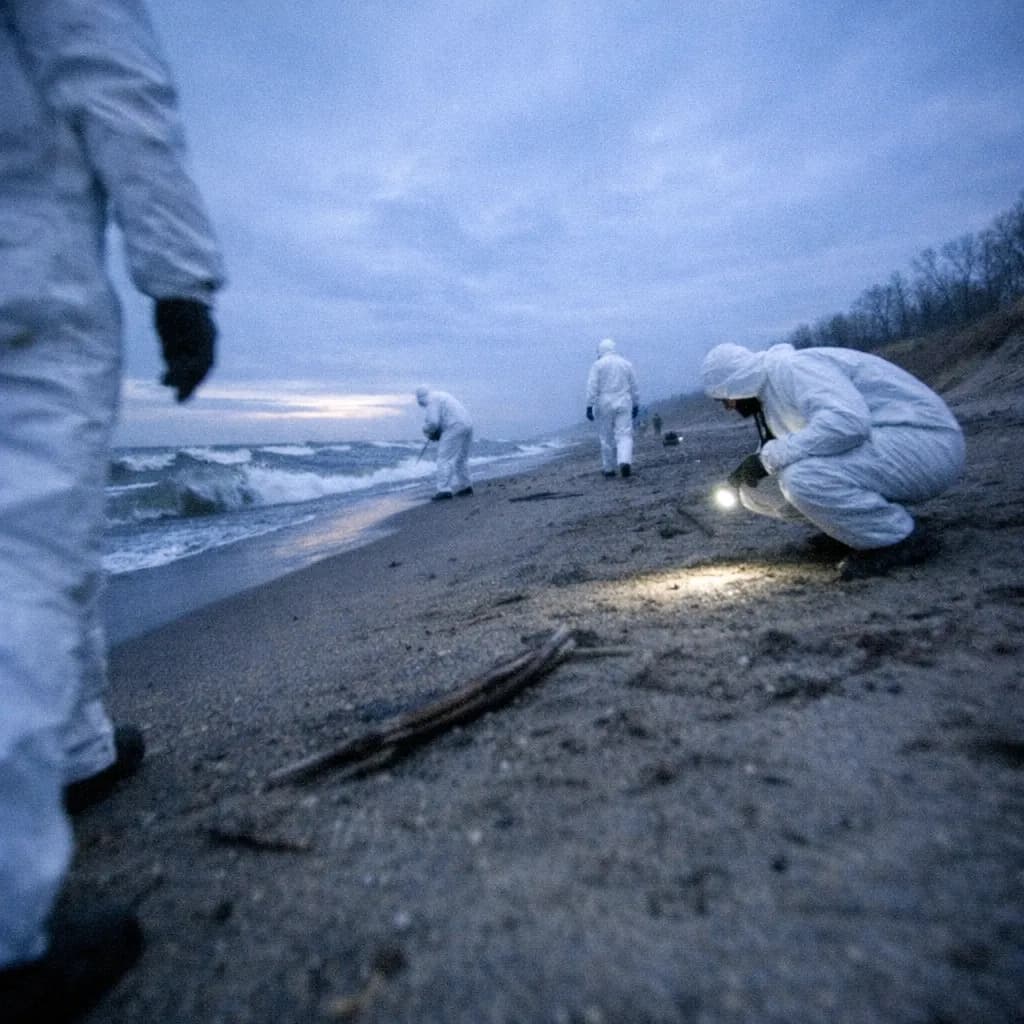
The following day, reality met the shores of Lake Michigan with a gruesome greeting. In Warnimont Park, the first signs of a nightmare appeared. A severed leg, washed up by the frigid waves, became the first piece of evidence in a case that rapidly escalated into one of the most discussed criminal investigations of 2025. This was no mere discovery; it was a brutal punctuation mark on a young woman’s dreams and a chilling indicator of a perpetrator’s methodical, cold-blooded nature.
Investigators conducted a systematic search of the coastline while family members waited in a state of paralyzed agony. Every wave that broke against the shore carried the potential for new, horrifying revelations. It was as if the landscape itself was trying to whisper a story that no one wanted to hear—a tale of dismemberment and destruction where a human being had been reduced to fragments in a desperate attempt to erase an entire existence.
Maxwell Anderson: Behind the Accused's Gaze
Who is the man at the center of this storm? In the courtroom, Maxwell Anderson appears as an enigma—a human puzzle where the pieces refuse to align. The prosecution has painted a portrait of a man whose West Milwaukee home harbored secrets dipped in blood. The discovery of biological evidence in his basement and incriminating coordinates on his phone created a suffocating web of circumstantial evidence that points directly to him.
The defense has sought to sow seeds of doubt regarding the weight of the technical evidence, but the dramatic details of the indictment speak their own haunting language. It is the story of a man who allegedly could convert a pleasant dinner into a crime scene with chilling precision. The case challenges our perception of the stranger—the one we invite into our lives through an app, who might carry a darkness that no profile picture could ever reveal.
Sade Robinson: More Than a Headline
Amidst the legal skirmishes and technical evidence stands the memory of Sade Robinson. She was never just a headline or a line item in an autopsy report. She was a daughter, a friend, and a student with the horizon of her life stretched out before her. Her fate has ignited a wave of fury and sorrow that reaches far beyond the borders of Wisconsin. By focusing on her life rather than just her death, the community seeks to restore the dignity that the perpetrator tried to strip away.
Her death has become a symbol of the dangers lurking in our most intimate spaces and a reminder of the vulnerability inherent in seeking love. The case has resonated deeply within the true crime community, where programs like Dateline NBC and various crime podcasts have attempted to navigate the balance between necessary documentation and respectful remembrance. It is a narrative that demands we look the complex human drama in the eye without flinching.
The Slow Wheels of Justice
As we move through 2025, Maxwell Anderson remains behind bars, awaiting the finality of a verdict. The trial has been followed closely by Court TV, where every witness testimony and every piece of evidence is turned and scrutinized under a kaleidoscopic lens of public attention. It is a judicial process that is not only about guilt or innocence but about understanding how such a degree of depravity can exist in the midst of the everyday.
Even as the legal framework seeks to bring order to the chaos, the case leaves deep, permanent scars. Questions about systemic failures, the safety of online dating, and the protection of young women have become central themes of the public discourse. Regardless of the trial’s outcome, the story of Sade Robinson will remain a dark stain on the collective conscience—a reminder that the void can be found even in the most ordinary of moments.
Follow the case of Maxwell Anderson and Sade Robinson on Court TV or listen to the latest updates onApple Podcasts-- and follow KrimiNyt for more in-depth and revealing true crime analysis.
Elliot Gawn
Admin